Eastern Black Swallowtails
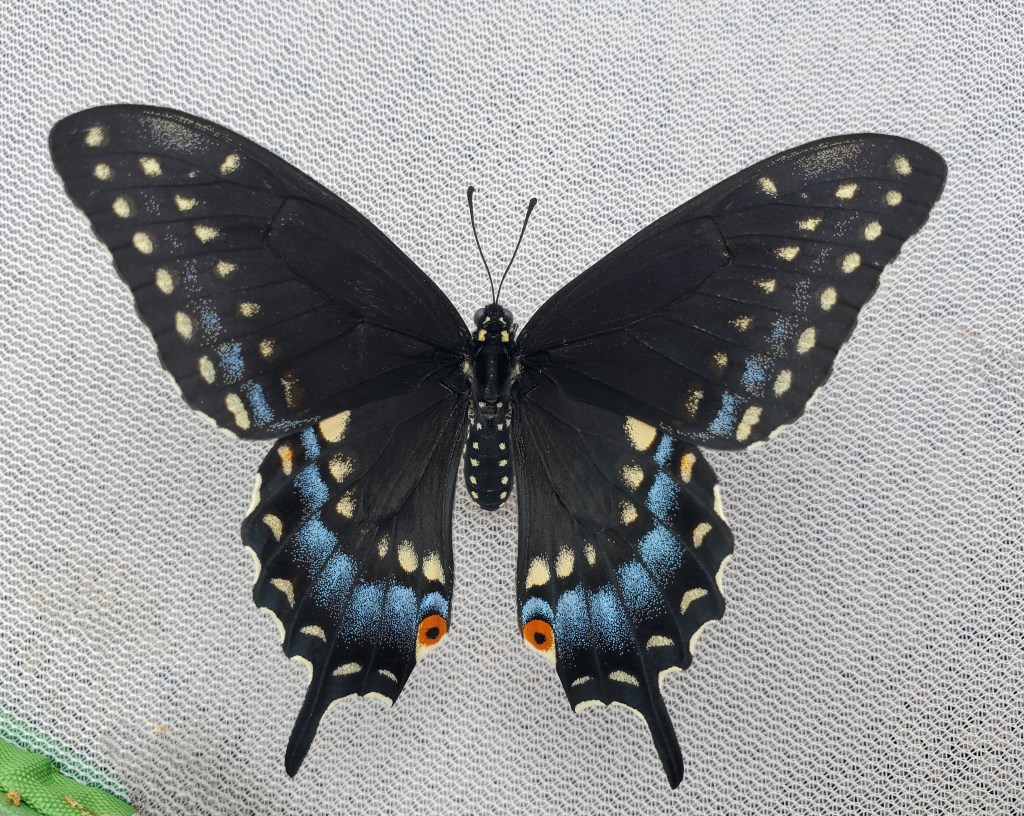
The eastern black swallowtail is one of my favorite butterflies to raise. Their caterpillars are hardy, their behavior is predictable, and their butterflies are strong. If you live in the eastern or midwestern United States, in the southern part of Canada, or in the northern part of Mexico, this could be the perfect starter butterfly to raise in your own backyard.
Attracting Eastern Black Swallowtails
In order to raise butterflies, you first need them to come lay eggs in your yard. Each butterfly species will only lay eggs on specific types of plants, called host plants, because these are the only plants their caterpillars can eat. Some of the top host plants that will bring eastern black swallowtails to your yard are:
- Dill,
- Carrots,
- Fennel, and
- Parsley.
The more you plant, the more butterflies you will attract. Plant enough food to sustain your hungry caterpillars throughout the entirety of their lives, or you may find yourself shopping for organic carrots and parsley at the grocery store. Caterpillars eat a lot, so plan on at least one mature plant per caterpillar. It is very important to not use pesticides.

Finding Butterfly Eggs
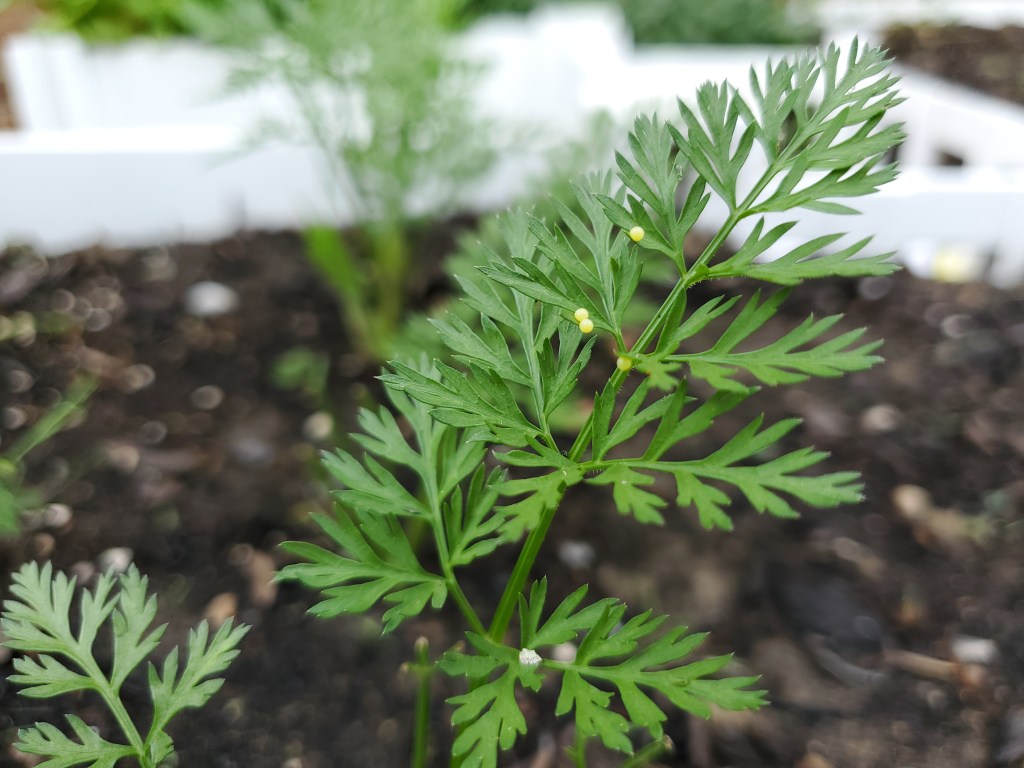
If you see a female eastern black swallowtail flying around your host plants (dill, carrots, fennel, parsley), you may just see her laying her eggs. Even if you don’t catch her in action, you can regularly check the leaves of your plants for a single small, yellow egg.
Once you’ve found eggs in your yard, you can leave them to develop naturally or decide to cage them. If you leave them out, odds are that many will eventually be eaten by spiders, wasps, or birds – this is OK! Your caterpillars are full of nutrients and are a vital part of your local food web (it takes 6,000+ caterpillars to feed a clutch of chickadees!). Some of your free-range caterpillars will make it all the way to butterfly, but you might not get to watch it happen.

Caging Butterflies
If you decide to cage some of your eggs, you will get to see caterpillars hatch, grow, form chrysalises, and emerge as butterflies.
Once you’ve found eggs on your host plants, transplant them into a 2-gallon plastic potting container. Do not cut off a sprig with an egg on it, because it will dry out, and the egg will die with it. Inspect the plants and remove any predators such as spiders. Other bugs like aphids and gnats aren’t desirable, but they won’t harm your caterpillars. Once the plant is safe, put it inside a mesh butterfly cage.
If you don’t notice eggs but start to see little caterpillars on your plants, you can move them at this stage as well by either moving the whole plant inside of your cage or by clipping the leaf it’s on and placing it on a plant you already have growing inside your cage. When the clipped leaf dies, the caterpillar will move onto the living plant.
Place your cage in a protected area outside where the plant can receive indirect sunlight and won’t blow over on a windy day. Depending on weather conditions, you may need to temporarily move your cage indoors. Many cages are mesh on three sides and plastic on the fourth for better viewing. Because the plastic can concentrate sunlight, turn this side to face north so as not to harm your caterpillars.
Raising Caterpillars
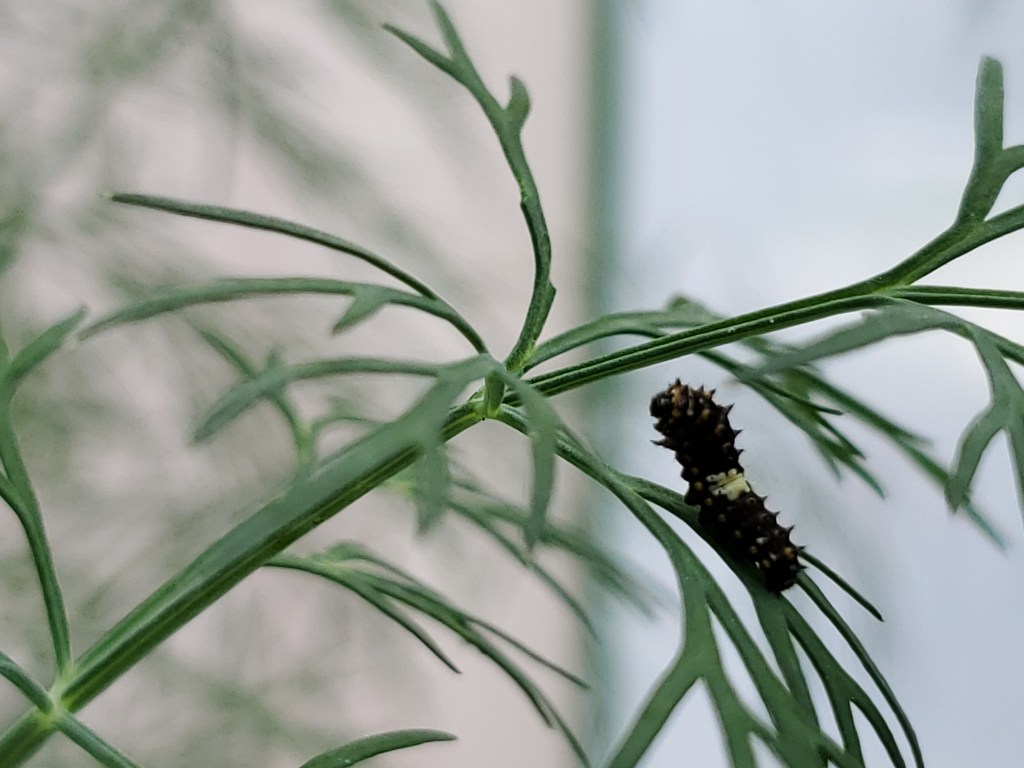
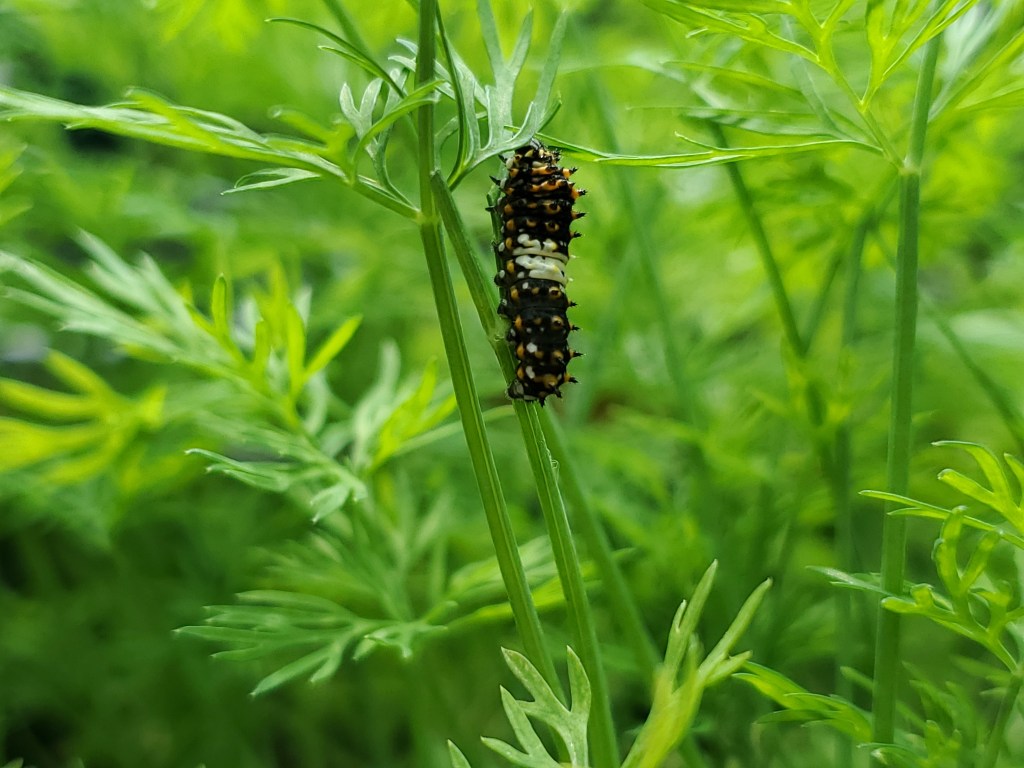
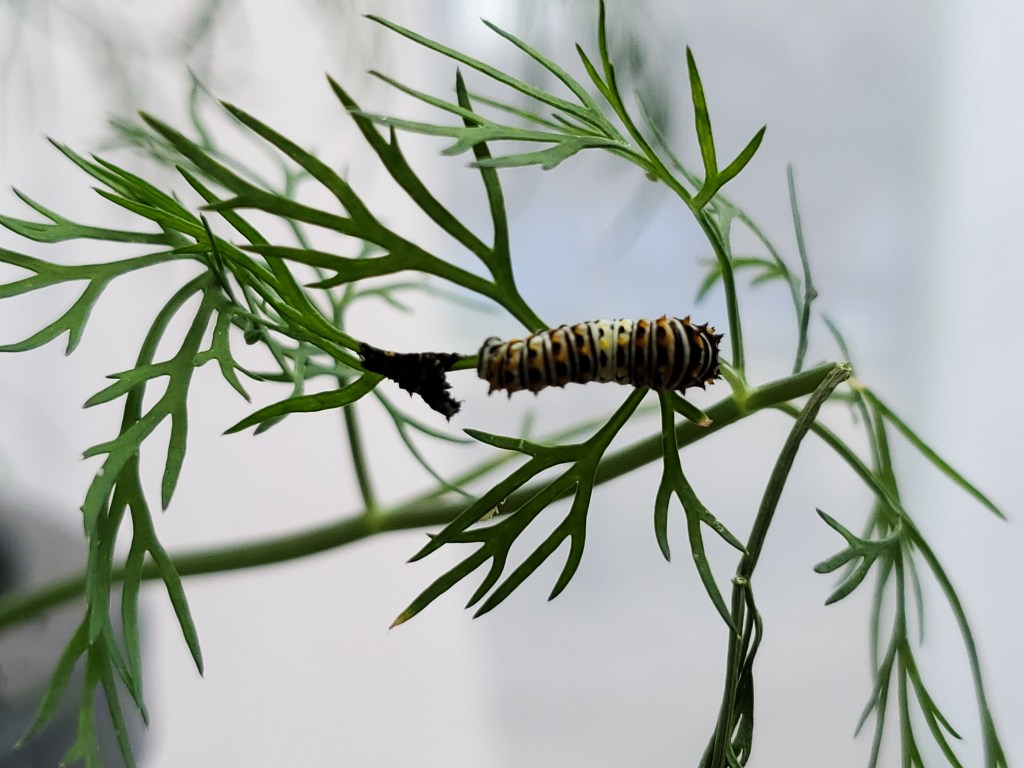
Your caterpillars will hatch as small, black, spikey creatures with a white band around their middles. Eastern black swallowtails go through five instars, or stages, where they will molt their skin in order to grow larger. Their appearance will change each time until they end up with vibrant black and green stripes with yellow dots.
Do not put caterpillars of different sizes together in the same cage. A large caterpillar will eat a small caterpillar along with the leaf.
If there’s plenty of food but your caterpillar isn’t eating, it’s probably getting ready to molt. Be patient and check on it again the next day.
Eastern black swallowtail caterpillars are not poisonous and are safe to handle gently. If a caterpillar is feeling defensive, bright orange antennae called osmeterium will pop out from its head and release a foul-smelling odor which is harmless.
All your eastern black swallowtail caterpillar wants to do is eat. It will not leave its food source (the host plant) until it’s ready to form a chrysalis. Simply watch them grow, make sure they have enough to eat, and clean out any frass (caterpillar poop) that accumulates.



Forming a Chrysalis
When your caterpillars are nice and fat, they will leave their food source and go on a walkabout. They will wander endlessly until they find the perfect spot on the host plant, the mesh, or the cage zipper to form their chrysalis. Be very careful not to zip over your caterpillar when opening the cage.
Your caterpillar will “super poop” to clear out its digestive tract, which you might see stain the side of the cage. It can be alarming if you aren’t expecting it. Once it’s in the perfect spot, the caterpillar will spin a silk girdle around its thorax and attach a silk pad at its bottom to support itself while it hangs. Its body will contract, its skin will split and get wiggled off, and only a chrysalis will be left. Many chrysalises are green, but some are brown. If something disturbs your chrysalis (like another caterpillar crawling over it), it will wiggle to ward it off.
It’s best to leave the chrysalis alone, but it might be necessary to move one that has formed on the cage zipper. To do this, use scissors to cut the silk girdle around the thorax, and spray water on the silk pad to gently remove the chrysalis. Simply place the chrysalis on the floor of the cage. Eastern black swallowtails are strong enough to climb the mesh after emerging to dry their wings and should have no issues emerging from the floor instead of from a hanging position.


Emerging
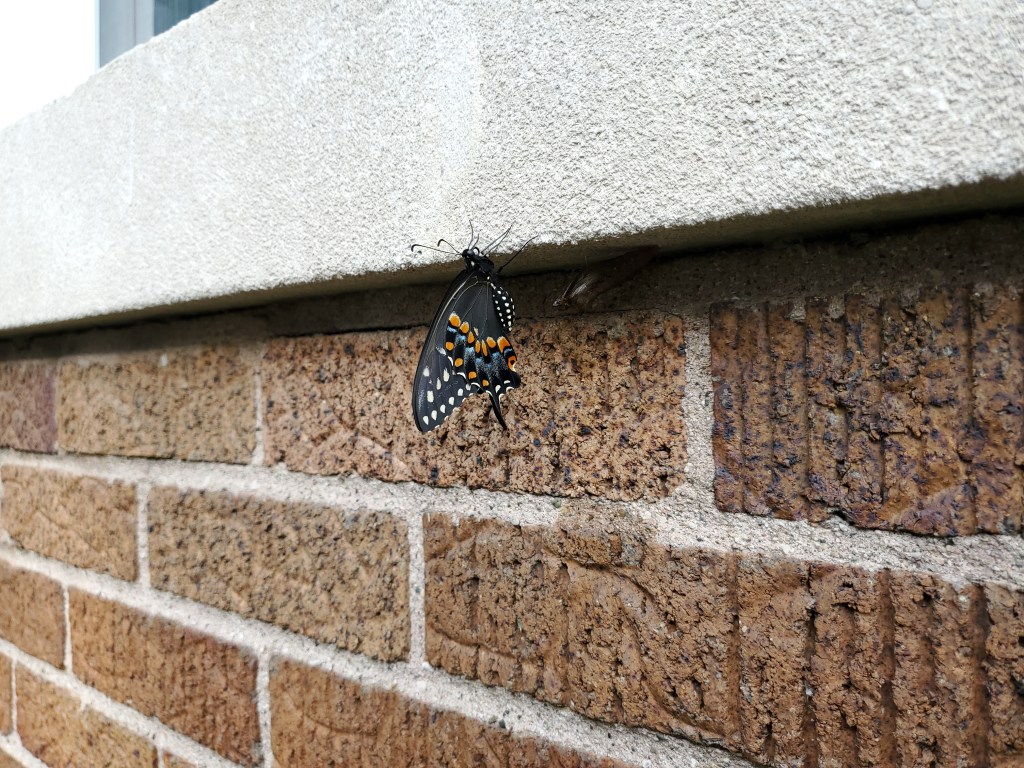
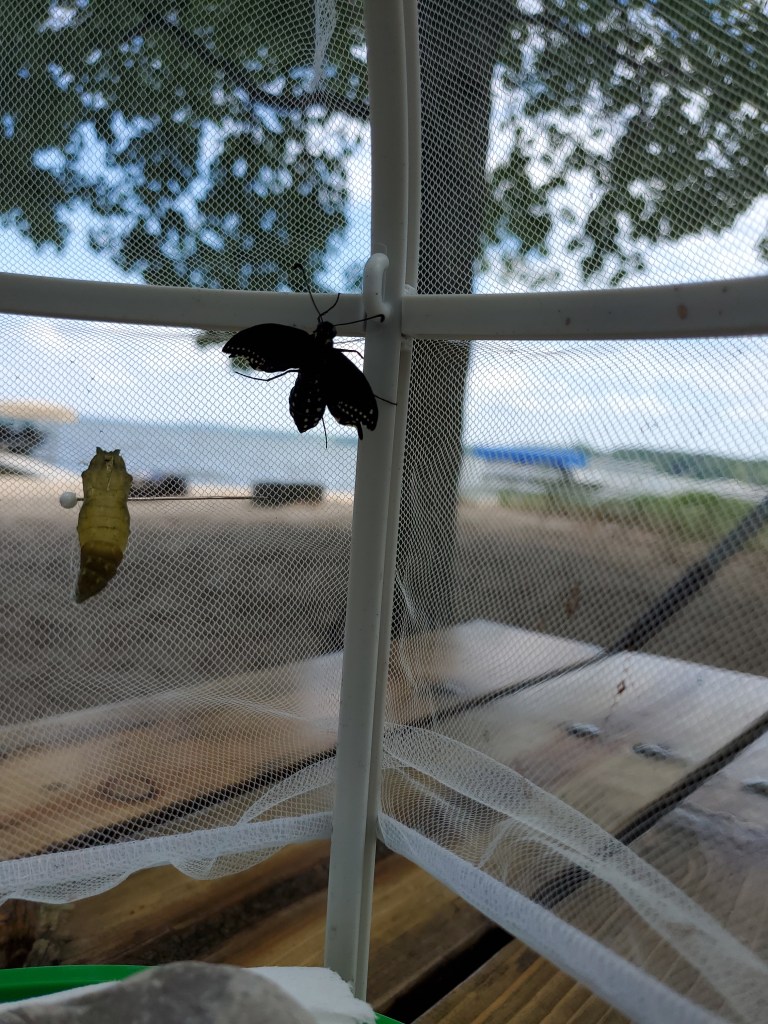
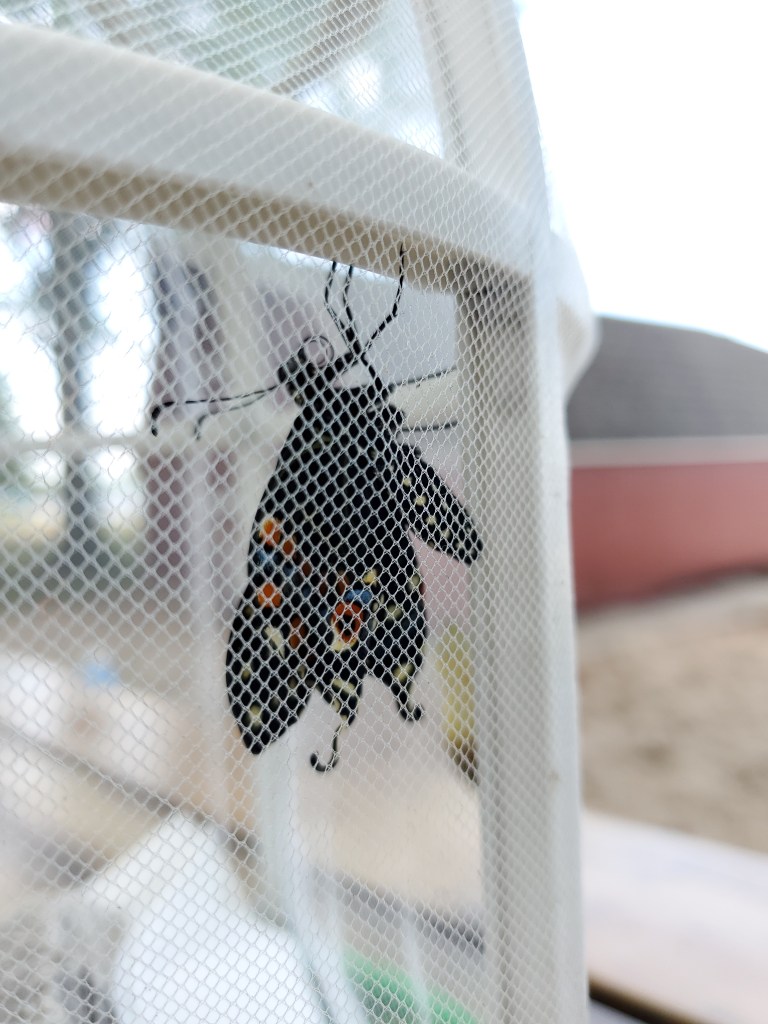
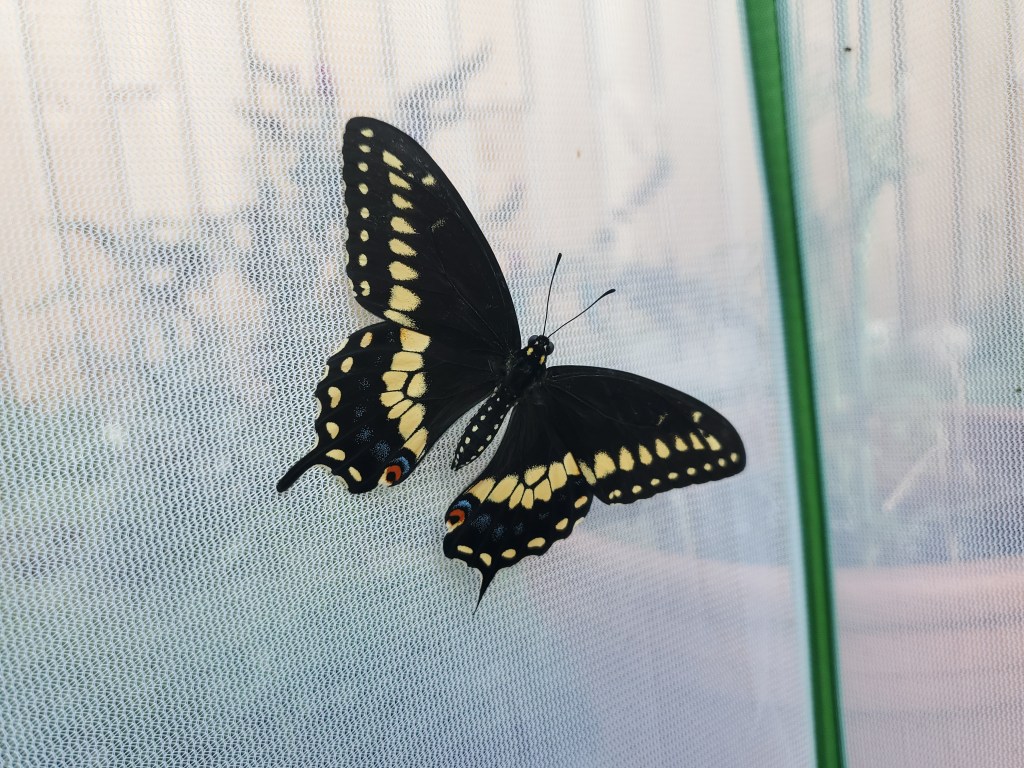
You will know your butterfly is close to emerging when its chrysalis grows darker and you can see the wings through it. The butterfly will split the chrysalis, climb out, and hang to dry its wings. Its wings will be wet and appear small and wrinkled. Its abdomen will be swollen and large until it expels meconium (waste that has built up while inside the chrysalis). The wings will get larger as they dry, and then your butterfly will look like the ones you’ve seen around your yard. Female eastern black swallowtail butterflies have more blue on their wings, and males have more yellow.
Occasionally, something besides a butterfly will emerge. Trogus wasps are red parasitic wasps that lay their eggs inside of eastern black swallowtail caterpillars. If your caterpillar has spent any time outside of the cage, it could become infected, and you won’t know until you find a hole chewed through the chrysalis and a wasp flying around inside the cage. This is OK and part of nature, but it can be alarming if you aren’t expecting it. If your chrysalis is sagging in the middle or the membranes between the abdominal section are brown, it could be infected.


Releasing
Give your butterfly time to adjust to this new phase of life, and once you see it fluttering around the cage, you’ll know it’s time to release. This could take a few hours, a day, or possibly longer. You won’t need to feed your butterfly during this time.
To give your butterfly the best chances, release it during the day and not right before evening. If it’s raining, hold off for clear weather. Simply unzip the cage, hold the door open, and watch as they fly away. If you’ve got plenty of host plants around your property, you’ll see the female back to visit.
Overwintering
Instead of migrating south, eastern black swallowtails overwinter, which means they stay in their chrysalises until spring. This will happen with caterpillars you raise at the end of summer. Simply move your butterfly cage into your garage to keep it cool and protected. Because it will no longer receive moisture from rain or snow, mist it a few times throughout the winter. In spring, you will be lucky enough to see the very first butterflies of the season.
Cleaning
When reusing a butterfly cage, you’ll want to disinfect it by soaking it in a diluted bleach solution and rinsing thoroughly. This is especially important if you’ve had disease issues. Do be cautious using household cleaners around the swallowtails, because they are bugs, which many cleaners are made to kill. So only clean when necessary and rinse thoroughly.
Illness
Unfortunately, caterpillars can get sick, just like anything else. Parasites, bacterial infections, and viruses can occur. Eating a plant treated with pesticides or coming into contact with a household pet’s flea and tick medication can be fatal. If you do your best to create a healthy environment, the majority of your caterpillars should do just fine.
Summary
- Plant eastern black swallowtail host plants dill, carrots, fennel, or carrots. No pesticides.
- Check the host plant leaves for a small yellow egg.
- Remove predators from the plant, then move it into a mesh butterfly cage.
- Your caterpillars will eat, molt, and grow. Make sure they have enough food, and clean out frass.
- Your caterpillar will create a hanging chrysalis which will grow dark and transparent right before the butterfly emerges.
- Once its wings are dry and it’s flying around the cage, you can release your butterfly.
- Chrysalises formed at the end of summer may need to overwinter in your garage until butterflies are ready to emerge in spring.
- Clean your cage using a diluted bleach solution before reusing.
 Raising Backyard Butterflies